■ Other core targets involved
Stakeholders involved: Employees, Park Enterprises, Neighboring Communities(Non-govern mental Organizations and the Public), Government Agencies
1. Ecological rehabilitation project
CTSP and TSMC jointly applied for and passed the first "Conservation OECM" (Other Effective Area-Based Conservation Measures) certification by the Forestry and Nature Conservation Agency of the Ministry of Agriculture. This program is promoted by Taiwan in accordance with the Kunming-Montreal Global Biodiversity Framework. CTSP and TSMC have become the nation's very first science park and semiconductor fab to receive this certification, carrying profound milestone significance and demonstrating the concrete results of long-term public-private collaboration between CTSP and park enterprises to promote biodiversity conservation and sustainable development.
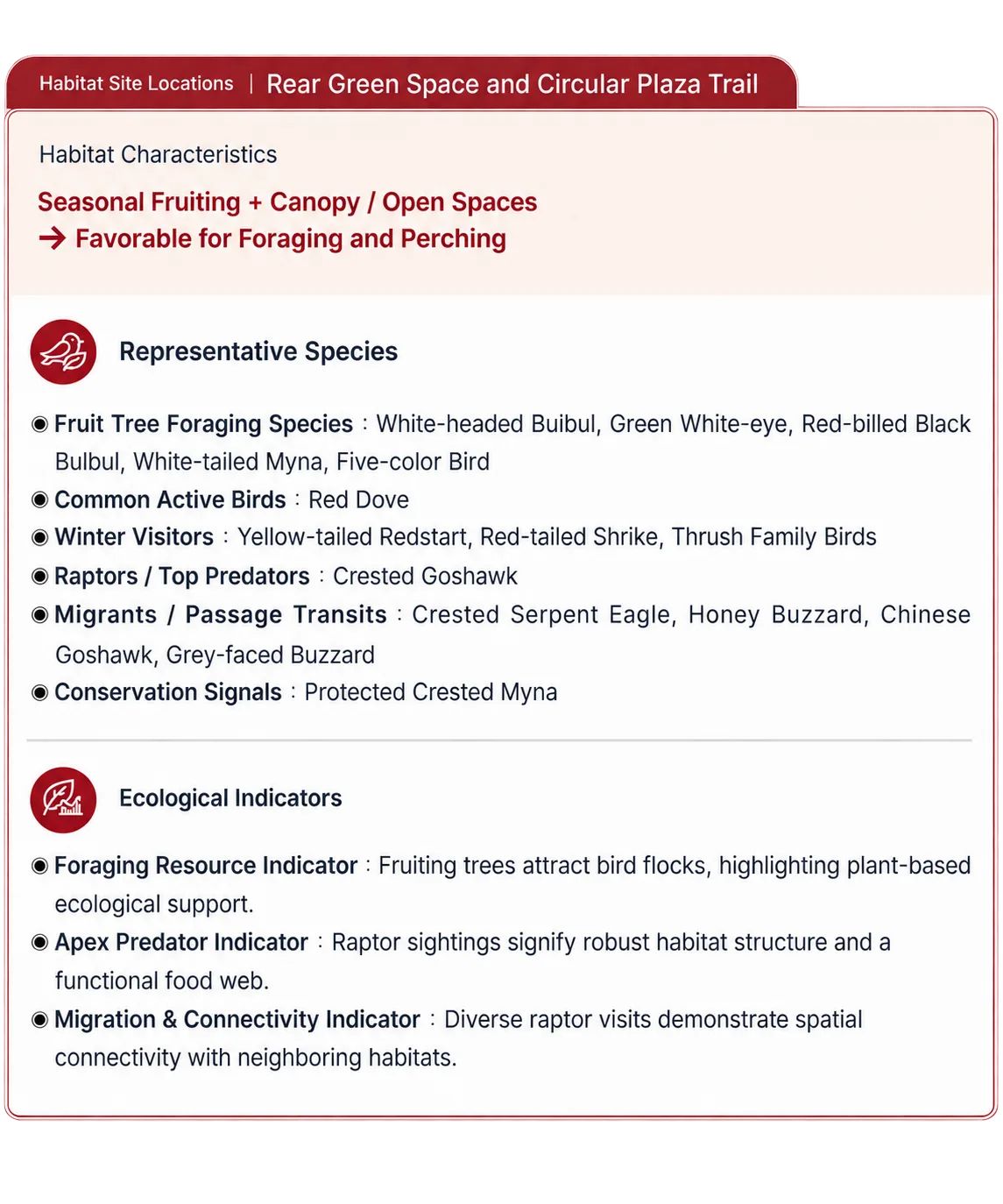
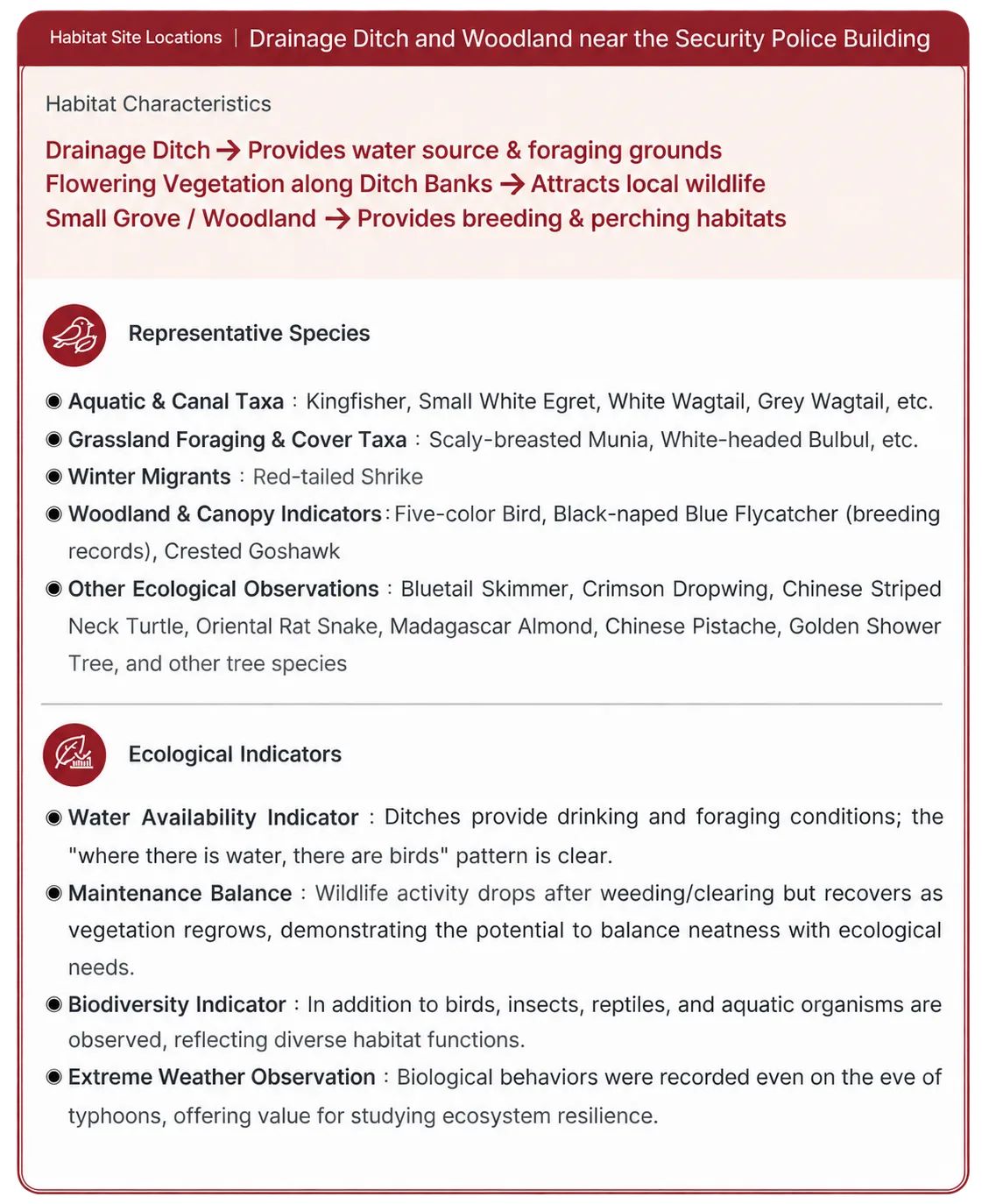
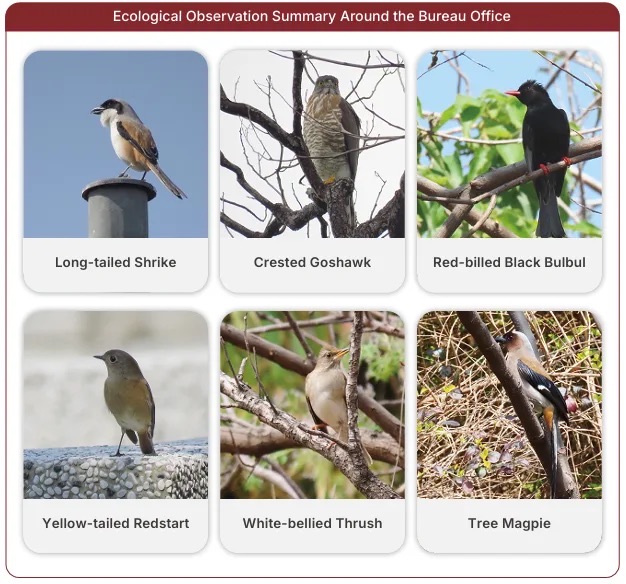
To promote park ecological construction and habitat maintenance, the Bureau and TSMC consulted ecological professionals and actively invested in ecological corridor interconnection projects, implementing multi-layered planting designs. In daily maintenance operations, friendly management measures such as zoned alternating weeding in drainage channels (half-and-half implementation) are adopted to maintain habitat function and ecological resilience. Concurrently, restoration efforts for rare native plants in the park, such as Zanthoxylum avicennae (dog pepper) and Homalium cochinchinense, continue to be advanced, dedicated to maintaining habitat integrity and biodiversity. Through long-term monitoring, observation recording, and simulation, purple crow butterflies have been documented passing through the park, and the area has become part of the activity range for various species, including the crested goshawk, Oriental honey buzzard, black-winged kite, Chinese goshawk, and leopard cat, representing the continuous improvement of the park's ecological environmental quality.
Park vendors have also actively responded to conservation actions. Notably, the greenbelt space of Taiwan Semiconductor Manufacturing Company’s (TSMC) Fab 15A simultaneously passed this certification, becoming the pioneering case of a domestic semiconductor manufacturing facility achieving this recognition, and successfully restored the protected fish species, the Barbour's minnow (Metzia bounthobae / Acanthobrama liolepis), demonstrating concrete results of enterprise-driven co-prosperity between production and ecology. Additionally, during the maintenance of the park's green spaces, the Bureau worked in close collaboration with park vendors on certification applications and ecological management operations to jointly elevate the overall ecological quality of the park.
2. Maintain an eco-friendly environment
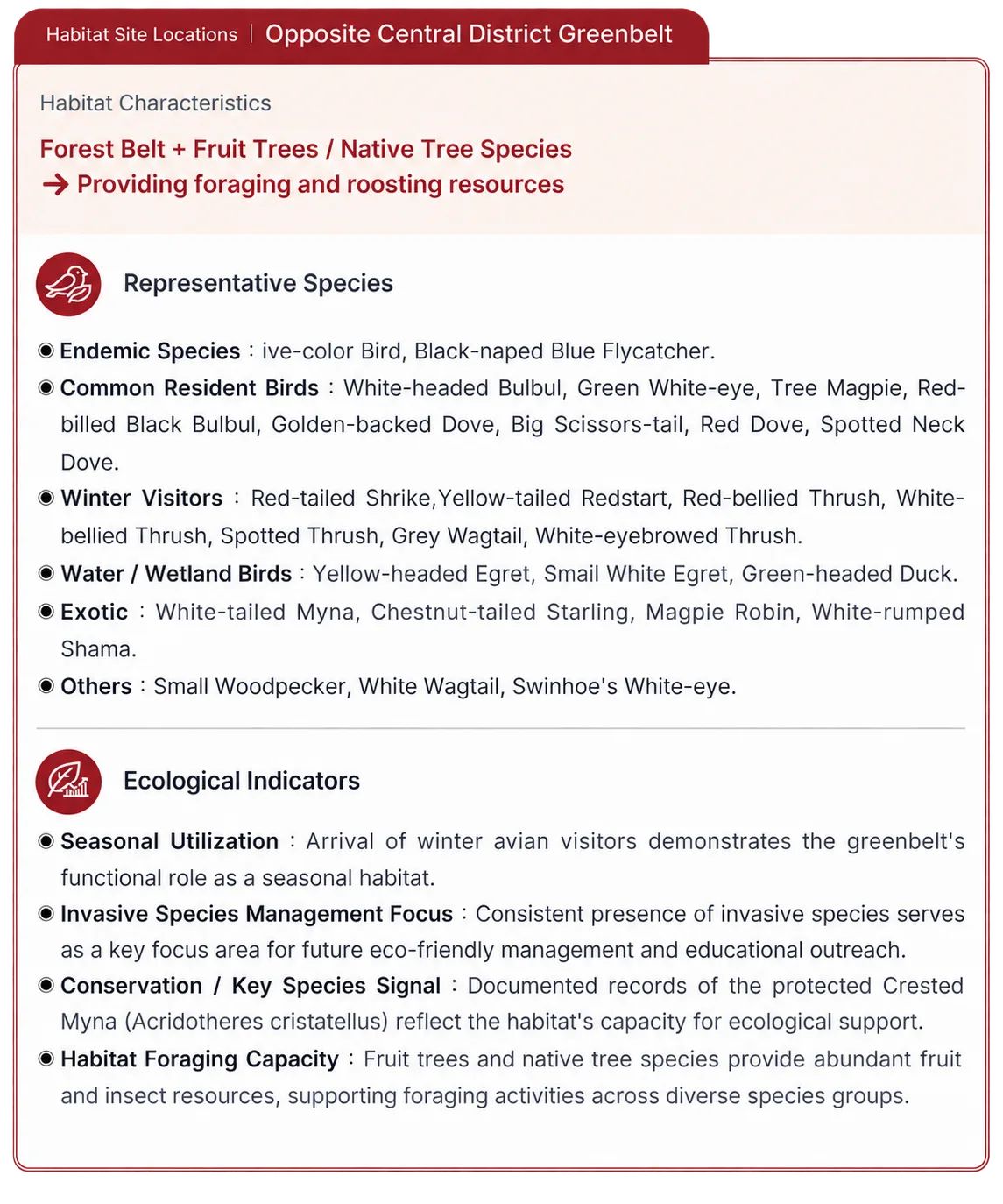
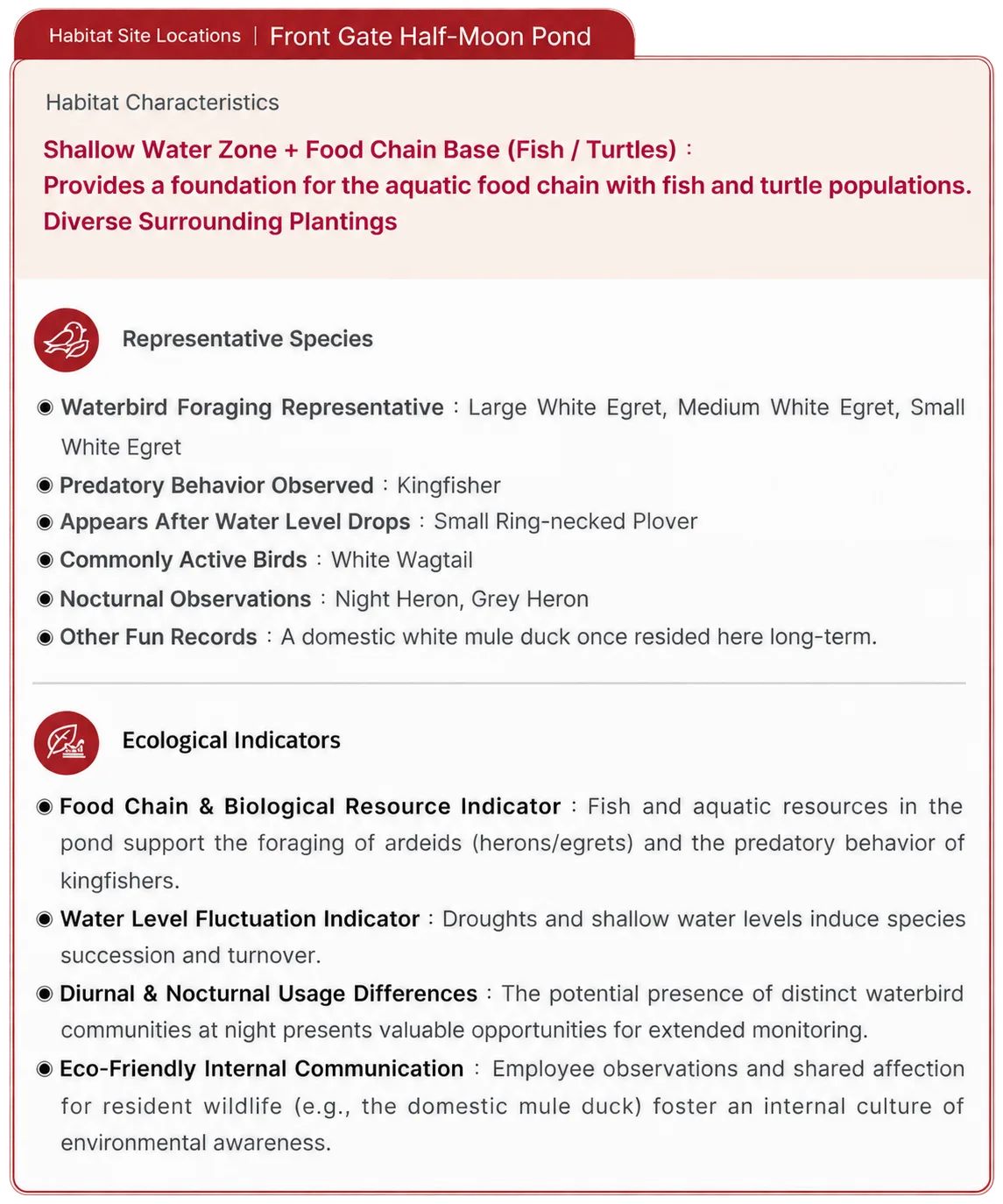
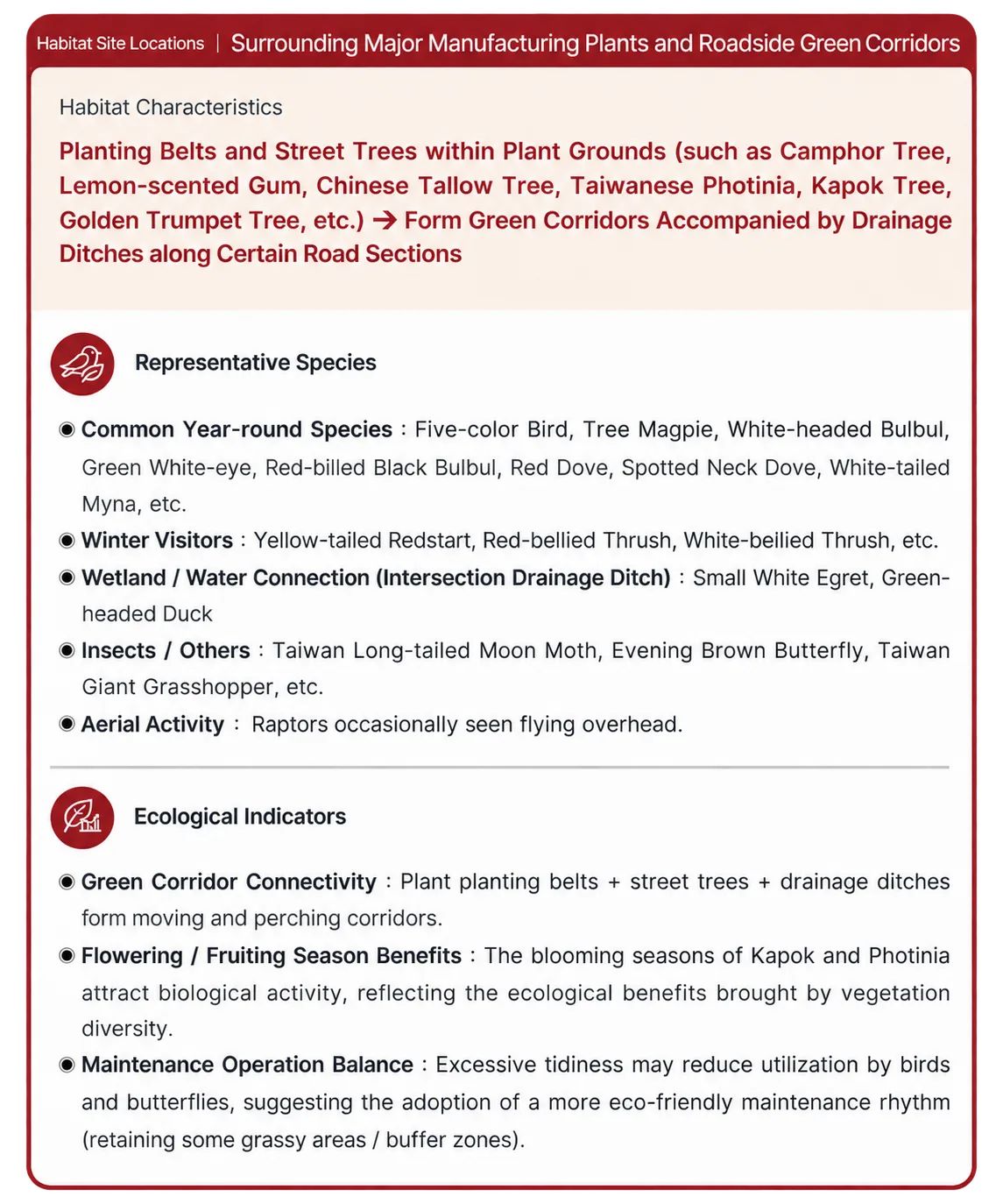
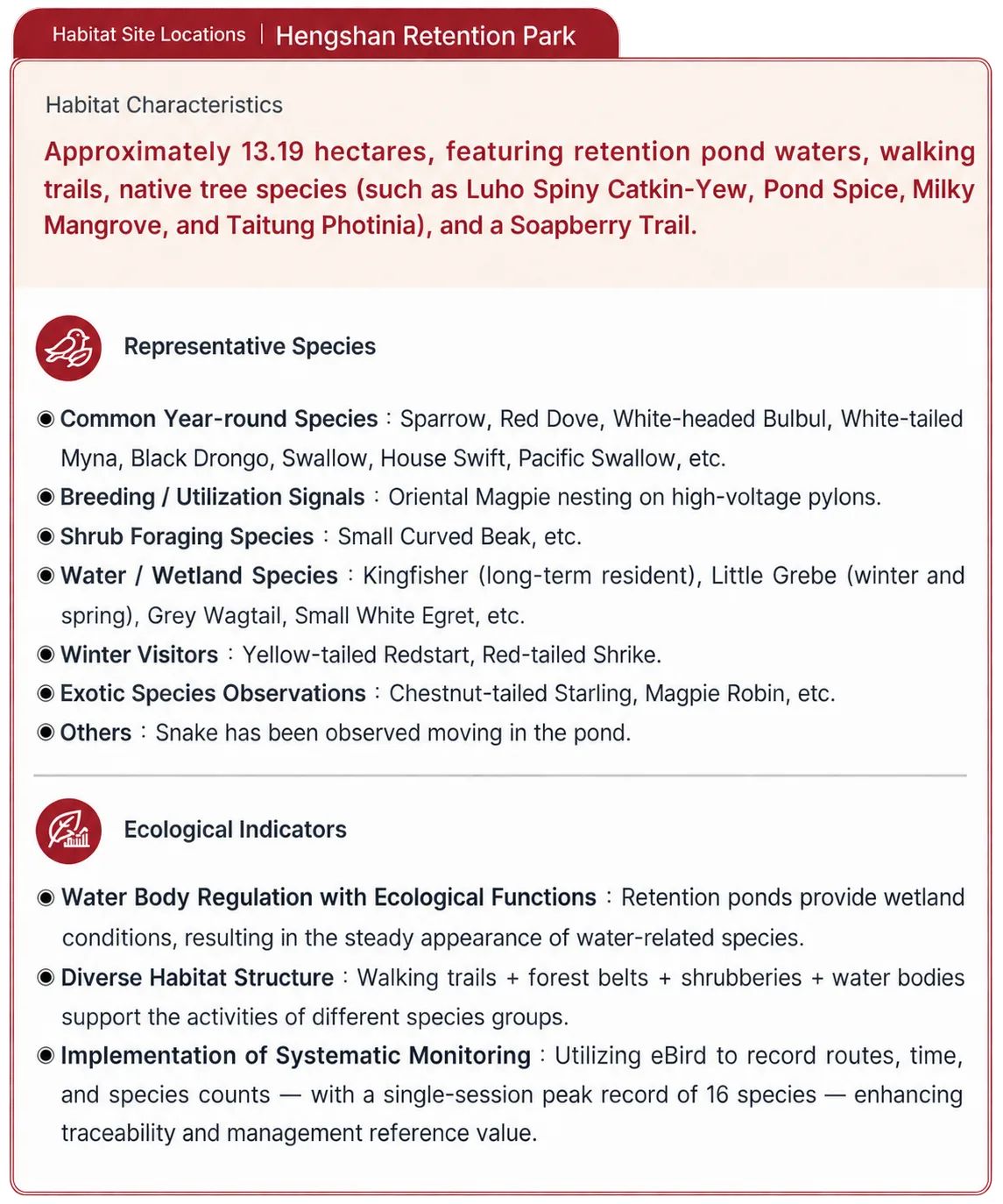
The CTSP Bureau continuously upholds the philosophy of "Co-prosperity of the Four Lives", utilizing green infrastructure such as detention ponds, parks and green spaces, greenbelt forest structures, roadside plantings, and drainage systems to create diverse habitats interwoven with water bodies, forest belts, and green corridors. These areas provide foraging, roosting, and seasonal utilization spaces for birds, insects, and other wildlife. In recent years, staff members have also utilized tools such as binoculars, cameras, and the eBird App to conduct daily observations and recordings across greenbelts and water bodies surrounding the Bureau, micro-habitats near the Police Brigade Building, green corridors along roads of major neighboring factories, and the Hengshan Detention Park, progressively mastering the park's biological utilization and seasonal changes. Observation results indicate that roadside trees and factory tree belts attract bird and insect activities during their flowering and fruiting seasons, while drainage ditches and detention ponds provide critical water sources and foraging environments. Concurrently, these findings serve as a reminder that the park should avoid "over-cleaning" during environmental maintenance, retaining moderate vegetation and micro-habitats to enhance biological utilization.
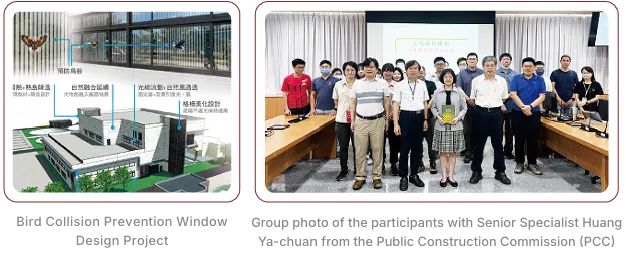
In terms of engineering and operational management, the CTSP integrates eco-friendly concepts into disturbance reduction and safety designs. The expansion and renovation project of the park's wastewater treatment plant introduces eco-friendly construction methods featuring low noise and low dust to mitigate disturbances to birds and the surrounding environment, while incorporating green building standards, ecological friendliness, and bird-strike prevention measures into the design to enhance habitat safety. Concurrently, the park leverages enterprise resources to promote carbon-negative demonstrations, converting pruned branches and leaves into biochar to enrich the soil, thereby balancing resource recycling with carbon sequestration benefits, and demonstrating a management approach focused on "reducing disturbance, enhancing safety, and recycling to reduce carbon."
Furthermore, the CTSP Bureau strengthens its ecological governance capabilities through ecological checks and cross-unit exchanges. The Bureau participated in the "Ecological Check Mechanism Operational Principles and Case Sharing" seminar hosted by the National Science and Technology Council, exchanging ideas with approximately 40 participants, including park colleagues, consulting firms, construction contractors, and ecological survey vendors. The event focused on core concepts such as public participation, effective conservation, and information transparency, while utilizing strategies like avoidance, minimization, mitigation, and compensation to reduce the environmental impact of engineering projects. Notably, the CTSP Taichung Park received the Diamond-level Eco-Community Label in 2020, and the Bureau compiled the park's flora and fauna research into the publication Science Park Where Butterflies, Dragonflies, and Birds Soar, showcasing the concrete results of the park's long-term promotion of ecological co-prosperity and sustainable management.
2. Promote environmental education
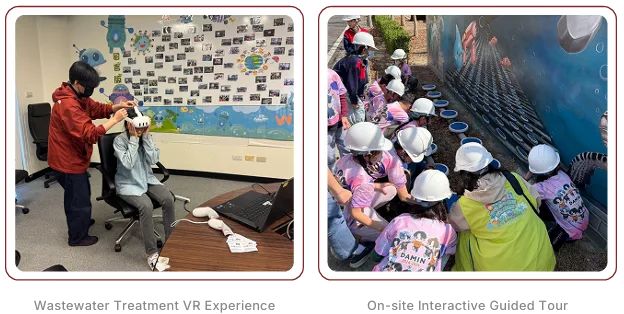
The CTSP Bureau integrates resources from the public and private sectors, schools, and enterprises within the park, transforming sustainability topics such as water resource conservation, wastewater treatment, circular economy, renewable energy, green buildings, AI-driven intelligent wastewater treatment, soil carbon sinks, and net-zero carbon reduction into understandable, experiential, and actionable environmental education actions. Currently, all three CTSP wastewater treatment plants in the Taichung, Houli, and Huwei parks have obtained environmental education facility certification, forming an environmental education network with sites such as the AUO Taichung plant and the TSMC CTSP Eco-Park. Through age-appropriate courses, guided tours, experimental operations, AR/VR experiences, interactive games, DIY hands-on workshops, and innovative teaching aids, school teachers and students, corporate groups, park employees, and the general public can understand the importance of environmental sustainability in both everyday and industrial contexts.
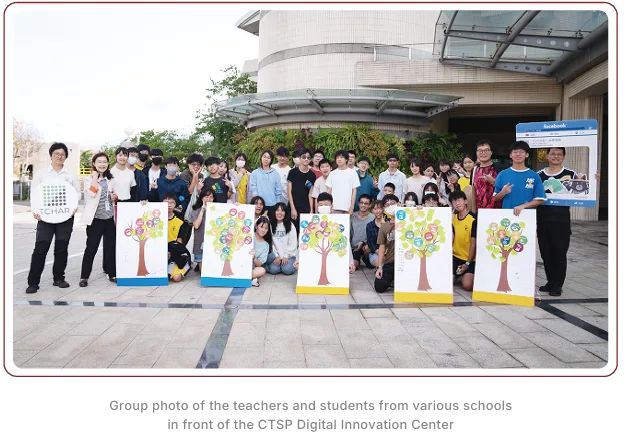
In terms of campus and international exchange, the CTSP Digital Innovation Center integrates resources from park enterprises to promote sustainability education, introducing concepts of net-zero circularity and soil carbon sinks to assist high school teachers and students in planning concrete environmental action plans based on the SDGs. On March 6, 2024, teachers and students from Wen-Hua Senior High School's SDG elective course visited the center to learn about biochar, the EBC Sink Pioneers Alliance, and related sustainability applications, planning their own biochar application schemes through group discussions. On October 30, 2024, civics and geographic research methodology students from the Central Taiwan Science Park Experimental High School also visited the site, brainstorming viable environmental actions from the 17 SDG goals through sustainability tree discussions and project presentations. In January 2025, the math and science gifted class from Pingtung Girls' Senior High School visited for the first time, learning about CTSP's water resource management, smart water treatment, and biochar nature-based solutions. In February 2025, 24 students from Wen-Hua Senior High School and a Washington, D.C. public charter school co-visited for an exchange, sharing hands-on experiences of using biochar to promote campus planting and sustainable actions, thereby expanding the impact of sustainability education across campus and international exchange levels.
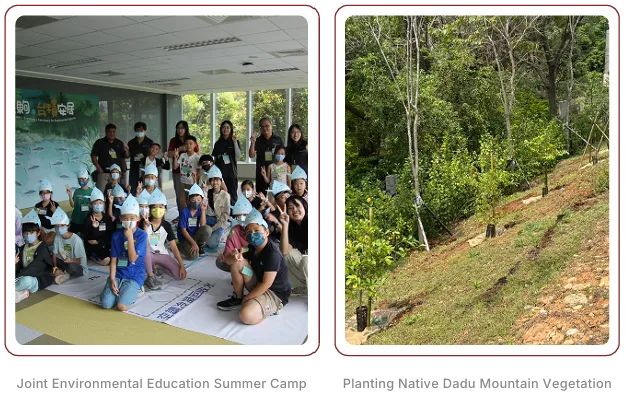
In terms of promoting environmental education venues within the park, the Huwei Park Wastewater Treatment Plant obtained certification from the Ministry of the Environment in May 2016 and won the Outstanding Award in the Environmental Protection/Energy Saving Facilities category in 2023. It focuses on water resource conservation and wastewater treatment, enhancing learning engagement through games, DIY activities, online app games, and water-conservation outreach. Between 2024 and 2025, it successfully conducted a cumulative total of 39 environmental education courses and promotional activities serving 984 participants, 8 large-scale outdoor promotional events serving 3,310 participants, and 10 outdoor mobile teaching sessions serving 250 participants. The Houli Park Wastewater Treatment Plant obtained certification from the Ministry of the Environment in February 2017 and won the Outstanding Evaluation Award in 2024. Centered on the themes of water cycle education, wastewater treatment, and sustainable environments, it integrates on-site guided tours, hands-on experiments, interactive projection games, detention pond ecology, renewable energy, green buildings, and AI-driven intelligent wastewater treatment plant features. Between 2024 and 2025, it successfully conducted a cumulative total of 55 environmental education courses and promotional activities serving 1,582 participants, alongside 9 large-scale outdoor promotional events serving 3,424 participants. The CTSP Taichung Park Wastewater Treatment Plant obtained certification from the Ministry of the Environment in 2018 and won the Outstanding Evaluation Award in 2022. Taking water resource conservation, wastewater treatment, and net-zero green living as its main core pillars, it features a dedicated environmental education classroom and incorporates decommissioned equipment displays, plantings of native Dadu Mountain vegetation, and wastewater treatment AR/VR guided games to boost learning engagement and retention. Between 2024 and 2025, it successfully conducted a cumulative total of 69 environmental education courses serving 1,706 participants, while also participating in 15 external promotion and exchange events serving 2,850 people.
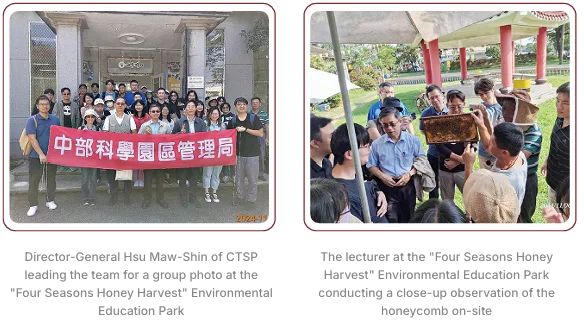
Apart from venue-based courses, the CTSP Bureau also continuously organizes diverse environmental education activities to deepen park employees' understanding of nature, biodiversity, and ecological risks. In 2024, four sessions of the "Four Seasons Honey Harvest" outdoor environmental education park learning courses were held. Through activities such as observing bees, wearing beekeeping suits, identifying queen bees, drone, and worker bees, tasting honeycomb honey and pollen, and learning about traditional honey harvesting equipment, employees were guided to understand the relationship between bees, pollinating insects, and the ecological environment.
Furthermore, on November 6, Professor Chen Yu-wen from National Ilan University was invited to give a keynote presentation sharing topics on sacbrood virus disease, the impact on wild bee populations, the decline of pollination services, and biosecurity issues, raising employees' awareness of environmental change and biodiversity risks.
In 2025, four sessions of the "Jiuxionghu" outdoor environmental education courses were organized, arranging for employees to visit the Chen Family Farm Garden and the Pitangwo Wetland. Through guided tours, observations, and interactive experiences, participants learned about the characteristics of flora and fauna, diverse habitats, and the symbiotic relationship between humans and nature, further incorporating the principles of environmental sustainability into their daily actions.
相關連結>FITI創新創業激勵計畫
https://fiti.stpi.narl.org.tw/index