Other core targets involved
Stakeholders involved: Employees, Park Enterprises, Suppliers, Media
1. Green Energy and Shared Prosperity CTSP Park
In alignment with Taiwan’s 2050 Net-Zero Emissions Pathway and “energy transition” strategies, and in response to global green energy trends, the CTSP Bureau is actively conducting investment recruitment for both the Erlin Park and Huwei Park. The targeted industries for introduction include optoelectronics and green energy. We warmly welcome upstream and downstream supply chain manufacturers involved in technological R&D, equipment manufacturing, and key component supply for the green or renewable energy sectors to establish their operations in the parks, thereby developing a robust green energy industrial cluster. Among these sites, the Erlin Park stands out as a high-tech science park characterized by strong local integration. The industry categories already successfully introduced to the park encompass precision machinery, integrated circuits, computer peripherals, optoelectronics, biotechnology, and green energy.
To drive the development of the circular economy demonstration industrial park, investment recruitment operations will continue to be actively promoted. Interested manufacturers can submit proposals in accordance with the standard format of the Park Enterprise Investment and Operation Project Proposal and the key focus areas of the Service Demand Briefing. A panel of experts and enterprise representatives will then be progressively convened to conduct evaluation and selection processes. Once selected, the chosen manufacturers must apply for park admission or add new service items, products, or technical services following the standard park enterprise entry procedures. In meeting service demands both inside and outside the parks, priority will be given to the CTSP parks, followed by expansion to the Hsinchu (HSP) and Tainan (STSP) science parks. If there is still surplus capacity, assistance can then be extended to meet demands outside the science parks.
2. Declaration and verification mechanism
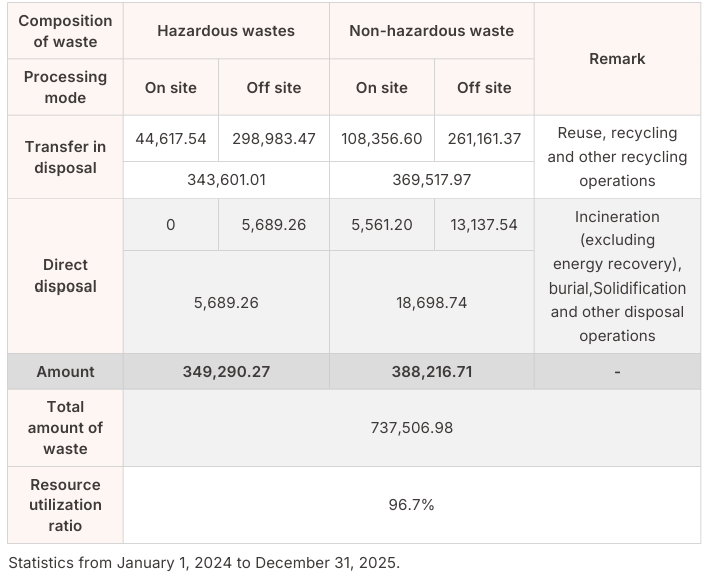
T The park enterprises under the jurisdiction of this bureau must report the waste output and storage data online after obtaining the permission of the waste cleaning plan. The bureau will also check from time to time and check whether the waste removed by the enterprise has obtained the proper handling documents certified by the disposal agency to ensure that there is no arbitrary dumping after the waste is removed..
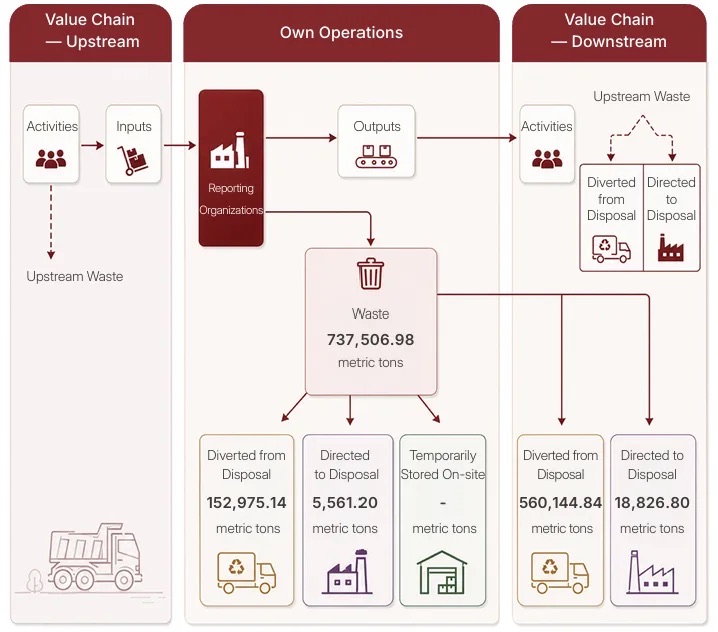
General industrial wastes are mainly sent to public and private disposal institutions for disposal, or handled in accordance with the relevant provisions of the Waste Cleaning Law on resource recovery and reuse. Hazardous industrial wastes are transported to the comprehensive industrial waste disposal center or qualified Grade A public and private waste disposal institutions under the guidance of the Ministry of Economic Affairs, or handled in accordance with the relevant provisions on reuse, and the real-time tracking system (GPS) is installed on the clearing machine for management.
3. Promote circular economy
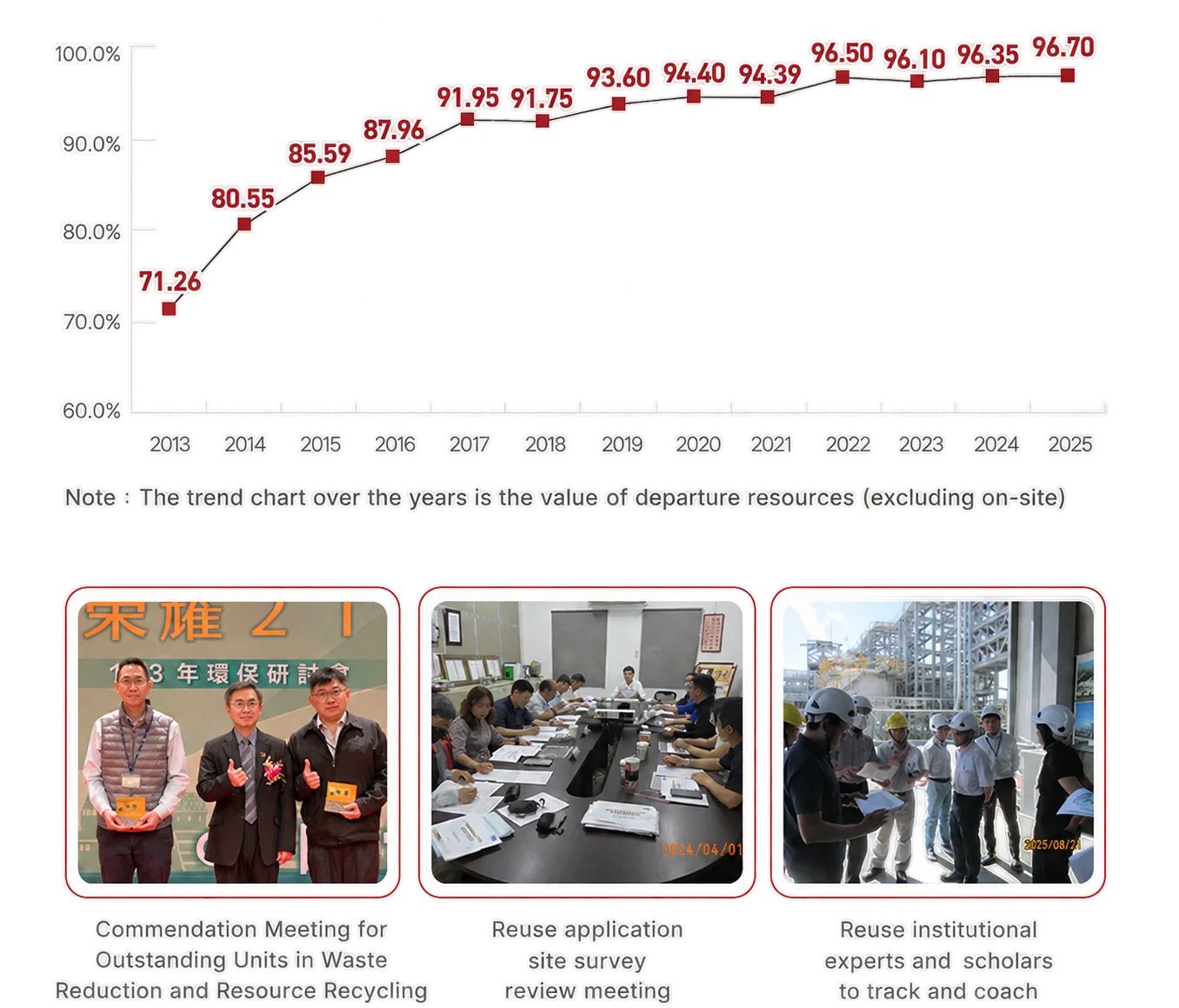
As the park continues to develop, the volume of industrial waste generated by park enterprises has increased year by year. To reduce environmental impact and enhance resource circulation efficiency, the Bureau continues to strengthen its assistance and guidance for park tenants. By promoting waste reduction at the source and implementation of recycling initiatives, and by providing professional recommendations on process improvements, sorting management, and reuse technologies, the Bureau helps manufacturers optimize resource utilization efficiency and substantially minimize end-of-pipe waste output. Furthermore, the Bureau organizes selection and recognition awards for outstanding units in waste reduction and resource circulation within the park. From 2024 to 2025, two outstanding manufacturers and two exemplary professionals in waste reduction and resource circulation were selected, and the recognized enterprises were invited to share their valuable experiences following the awards ceremony.
In 2024-2025, a total of seven applications for recycling were approved, and the recycling rate of waste in the parks under the jurisdiction of this bureau was increased to 96.1% (only off-site recycling), which was better than the recycling rate of industrial waste in the whole country. 209 waste inspections and publicity on source reduction were completed, and 2 publicity sessions on recycling technology and regulations were held.
4. Building Low-Carbon Sustainable Communities
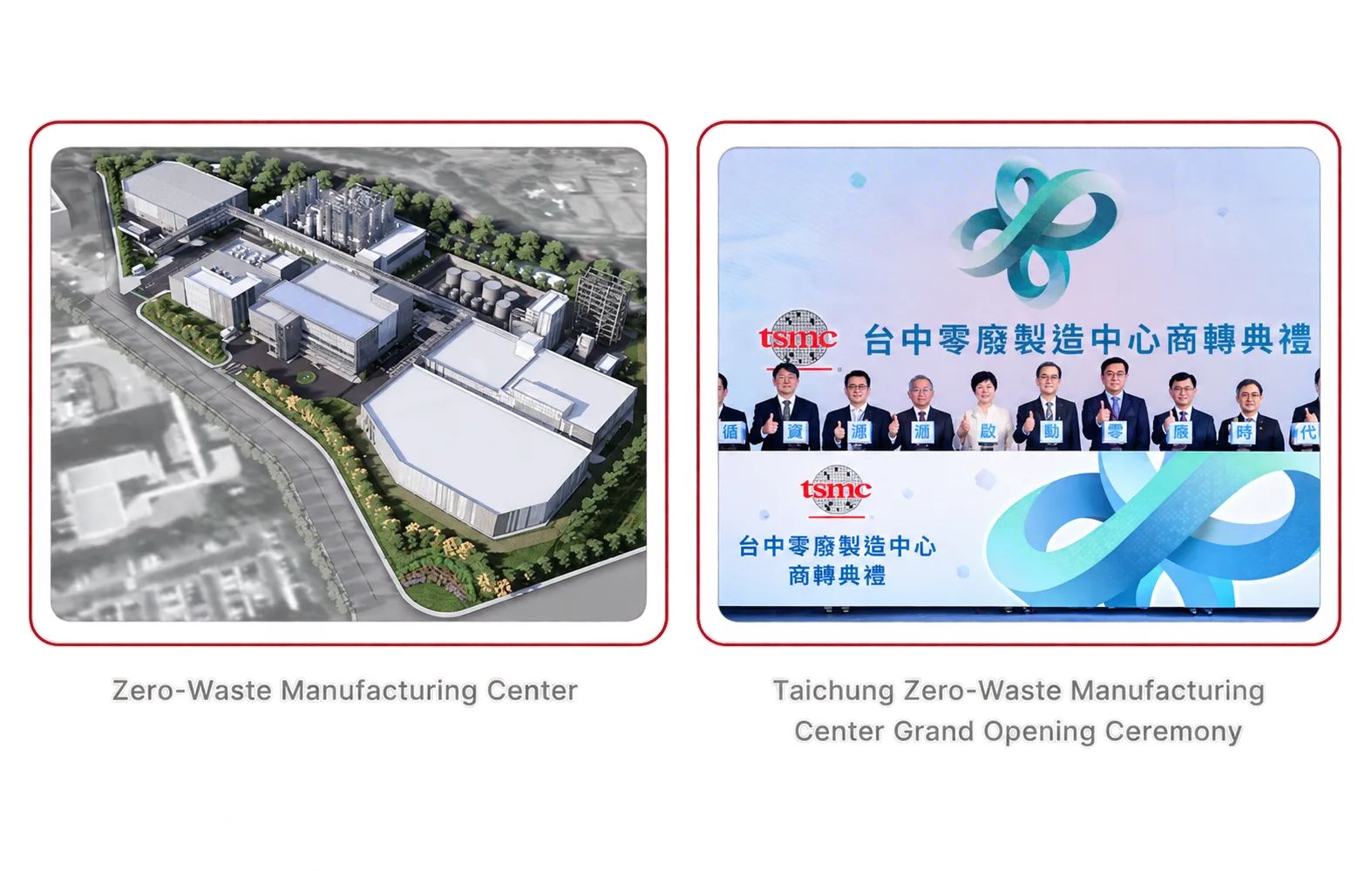
Taichung Zero-Waste Manufacturing Center
To assist park enterprises in advancing steadily through their low-carbon transitions, the CTSP Bureau continuously leverages regular communication mechanisms to compile the latest net-zero policy regulations, low-carbon technology trends, and carbon reduction achievements. Concurrently, the Bureau assesses the impacts of climate change on supply chains and clients to strengthen the park's sustainability and resilience. On November 13, 2024, Taiwan Semiconductor Manufacturing Company (TSMC) announced the official commercial operation of the Taichung Zero-Waste Manufacturing Center. Joined by green technology partners, supply chain representatives, academic and research institutions, industry associations, and government officials, this milestone marks a significant step forward in promoting green manufacturing within the CTSP Taichung Park.
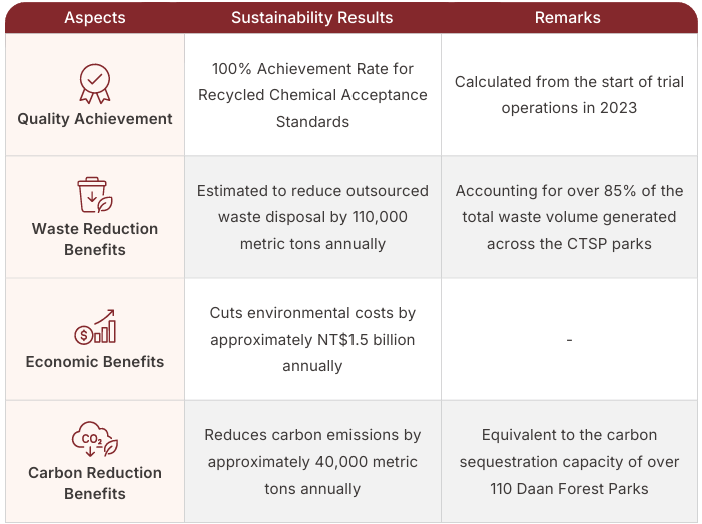
The Taichung Zero-Waste Manufacturing Center stands as a semiconductor industry-leading integrated energy and resource recycling facility. It is also the first circular economy demonstration center jointly built by CTSP and TSMC. Developed under the principles of maximizing waste reduction, maximizing environmental benefits, and minimizing management risks, the center houses four specialized recycling and treatment plants: Calcium Fluoride Sludge, Silica Sludge, Waste Organic Solvent Thermal Recovery, and Isopropyl Alcohol (IPA) Recovery. This setup ensures that waste resources do not leave the loop while maximizing the value of recycled materials. Since kicking off trial operations in 2023, 100% of the center's recycled chemicals have successfully met the acceptance standards for recycled products. Beyond being repurposed for other industries, future plans include upgrading these to electronic-grade recycled chemicals to be routed straight back into semiconductor manufacturing processes. This approach will significantly curb the demand for raw material extraction and expand the boundaries of the circular economy model. When operating at full capacity, the center is estimated to decrease outsourced waste disposal by 110,000 metric tons per year, accounting for over 85% of the total waste volume generated across the CTSP Taichung Park, cut environmental costs by approximately NT$1.5 billion, and bring about carbon reduction benefits of around 40,000 metric tons, which is equivalent to the carbon sequestration capacity of over 110 Daan Forest Parks. Furthermore, the Taichung Zero-Waste Manufacturing Center serves as Taiwan’s very first demonstration site to introduce “membrane carbon capture technology”, and TSMC has signed a Memorandum of Understanding (MOU) with the Ministry of the Environment to jointly push this technological development forward.
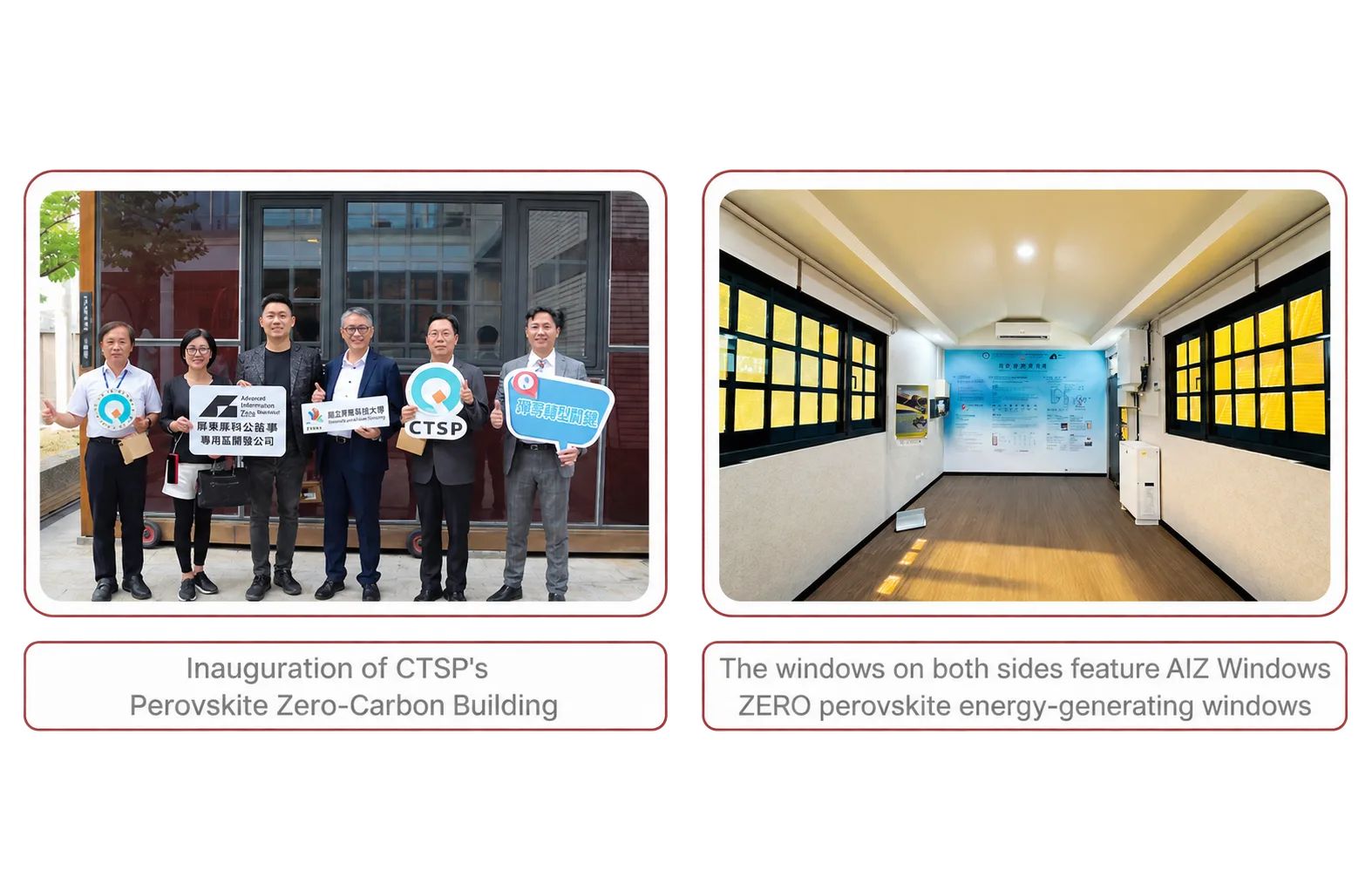
Startup Perovskite Zero-Carbon Building
The Central Taiwan Science Park (CTSP) Bureau officially inaugurated Taiwan's very first perovskite zero-carbon building (hereinafter referred to as the zero-carbon building) on June 20, 2025. This achievement symbolizes an innovative breakthrough for CTSP in smart building and green energy applications, and it marks a critical step forward in advancing net-zero carbon emission goals. Jointly designed and constructed by the CTSP Bureau through the integration of startups and technology companies, the zero-carbon building serves as a demonstration site for third-generation solar energy. Beyond showcasing the Bureau's proactive efforts in driving green energy technology development and application promotion, it also provides a concrete, referenceable application model for smart green buildings in Taiwan. Furthermore, it demonstrates the policy effectiveness of supporting and mentoring startups, further driving the promotion of innovative green energy technologies and smart integrated applications.
The zero-carbon building adopts perovskite energy-generating building materials and system designs provided by “Taiwan Perovskite Technology”, a CTSP startup team. These materials possess physical properties such as heat insulation, waterproofing, wind resistance, and noise reduction, creating an experimental zero-carbon site centered on “energy generation, energy storage, energy saving, and smart intelligence”. Through the introduction of next-generation perovskite solar power-generating building materials, the zero-carbon building balances aesthetics and functionality, putting into practice the innovative concept of "the building itself is a power plant." Furthermore, under the design integration of the park's engineering projects, smart technology applications have been introduced, allowing the building to serve as a verification platform and demonstration hub for the future development of smart cities and low-carbon parks. Moving forward, the Bureau will continue to combine resources from industry, academia, and research institutions to promote smart and low-carbon construction within the park, strengthen the sustainable development resilience of the tech industry, and align with the national 2050 Net-Zero Transition goals to march toward the blueprint of a smart green energy park.
Leading Taiwan: CTSP Secures Its First International Carbon Sink Certificate
The Central Taiwan Science Park (CTSP) Bureau collaborated with TCHAR in 2024 to establish a negative-carbon work base, jointly promoting a pilot project for biomass energy production facilities within the park. Utilizing the central district distribution reservoir land, the project recycles and resources tree branches pruned during park landscape maintenance. Through advanced pyrolysis technology, these resources are converted into biochar, which successfully passed the EBC international certification. This circular mechanism not only reuses the biochar for plantings within the park—achieving tangible benefits in carbon sequestration and soil improvement—but also secured Taiwan's very first international carbon sink (C-sink)certificate tradable on the global market. Furthermore, it has been registered on CDR.fyi, the world's largest carbon dioxide removal data platform, as the very first equipment listing in all of Asia, showcasing the park's leading position in waste resourcing and international integration..
In terms of technical verification, TCHAR, under the mentorship and guidance of the CTSP Bureau, has become Taiwan's first and currently only biochar producer to concurrently receive the dual certifications of EBC and Carbon C-sink. Through precise data verification technology(dMRV), it has been empirically proven that every ton of biochar produced achieves 2.625 tons of Carbon Dioxide Removal. This landmark achievement not only sets a precedent in Taiwan but also establishes practical experience for domestic industries to link up with international carbon credit certification mechanisms, concretely implementing a pathway that transforms local waste into internationally recognized carbon credits.
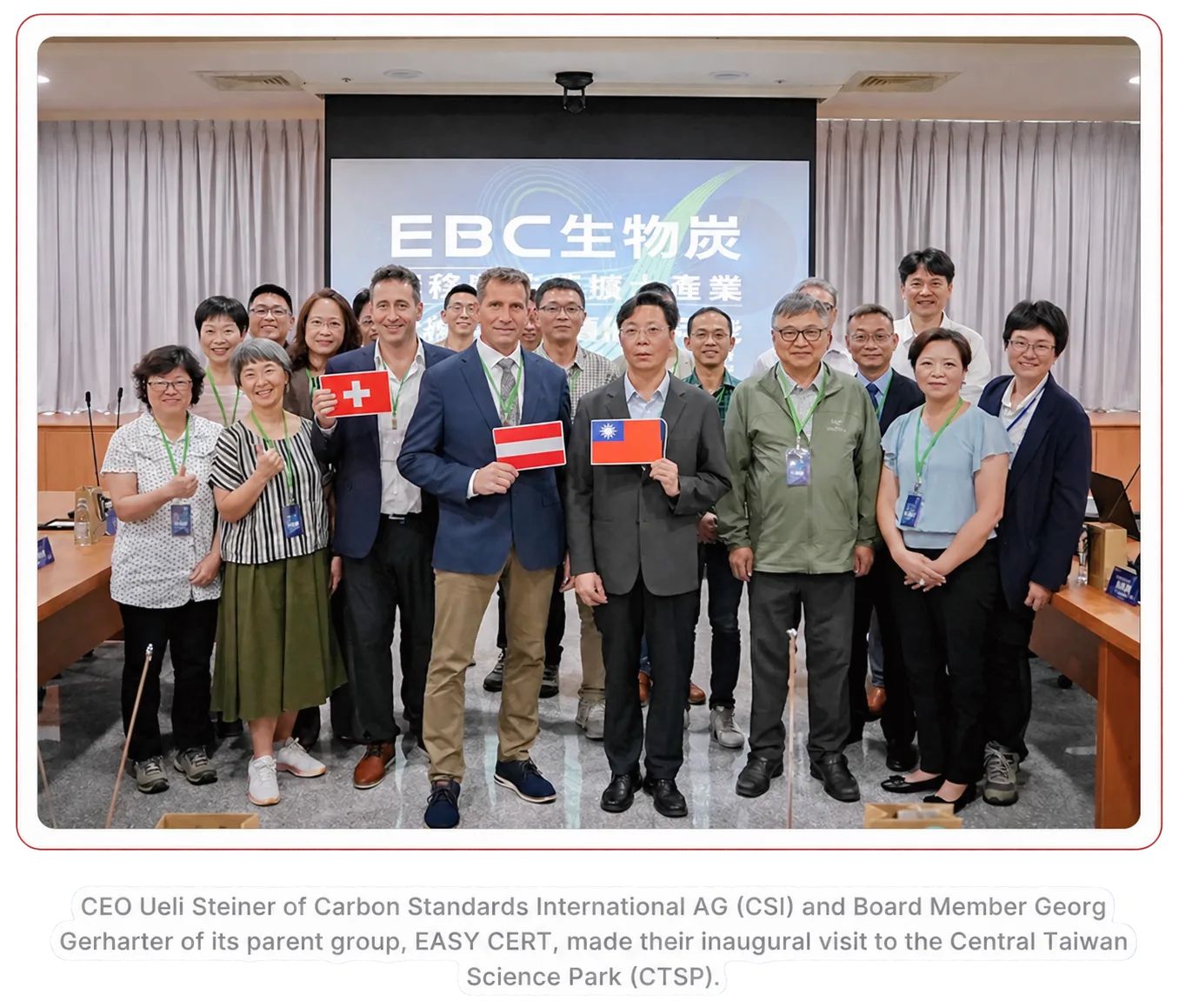
To consistently expand its sustainability impact, the CTSP Bureau hosted an expert panel discussion in 2025 titled "EBC Biochar Carbon Removal Technology: Expanding the Value and Potential of Industrial Sustainable Development." Deputy Director-General Shih Wen-fang and CSI (Carbon Standards International) CEO Ueli Steiner joined the panel as co-speakers. The forum delved into European biochar technology, the Global C-Sink system, and global carbon sink trends, covering forward-looking insights such as EBC standards and market dynamics. Through this cross-border dialogue and technical exchange, the Bureau not only helped various sectors precisely grasp international carbon removal standards but also provided highly actionable, sustainable solutions to meet Taiwan's carbon management needs on its pathway to net-zero emissions.