Other core targets involved
Stakeholders involved: Park Enterprises, Neighboring Communities(Non-govern mental Organizations and the Public), Government Agencies, Suppliers
1. Environmental review and audit
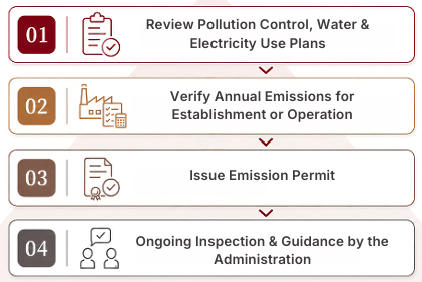
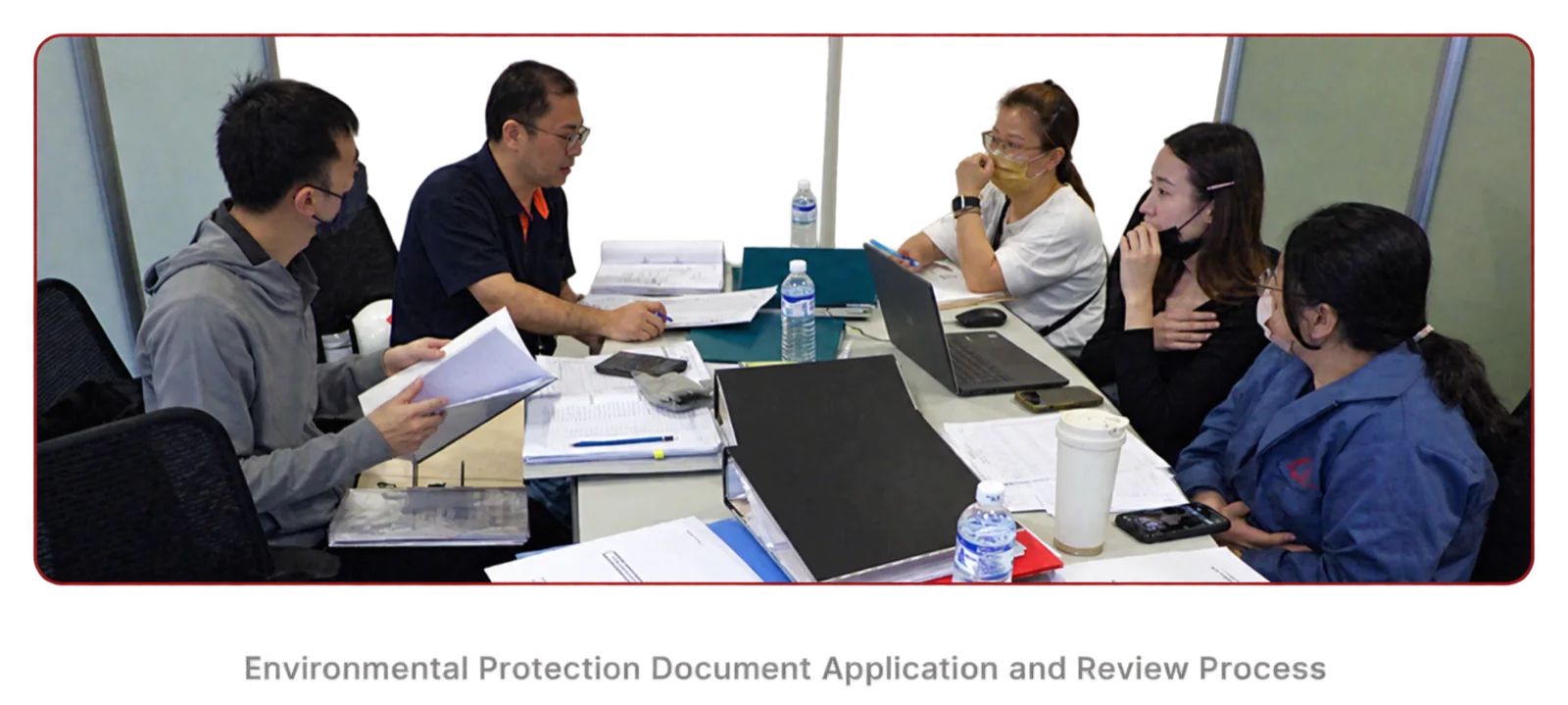
To safeguard the sustainable environment of the science park, the Central Taiwan Science Park Bureau utilizes total quantity control and permit reviews right at the investment application stage. It requires prospective tenants to submit individual pollution total estimates to gauge the overall impact of investment activities on the park, while ensuring compliance with environmental impact assessment documents, review conclusions, and commitments. Subsequently, on-site inspections and follow-ups are conducted to supervise tenants in implementing autonomous management, working together to maintain the environmental quality of the park.
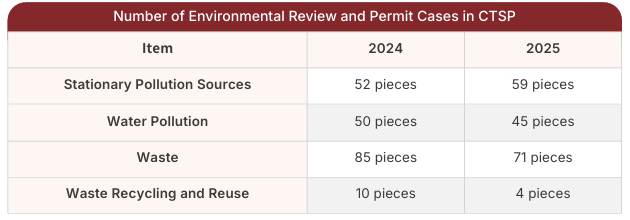
From 2024 to 2025, a total of 103 applications and modification cases for total pollution control were received, with 101 cases approved; 376 environmental protection document applications were processed, with 352 cases approved. The unapproved cases were either returned to the manufacturers for correction or are still in the application process.
To assist park tenants in grasping environmental regulations and practical needs, CTSP continues to organize regulatory briefings, chemical audit briefings, environmental seminars, and related briefing sessions, as well as arranging for experts and scholars to provide on-site guidance at factories. Between 2024 and 2025, a total of 14 regulatory and environmental promotion activities and 40 on-site factory guidance sessions were conducted. Additionally, 2,310 environmental consultation services (excluding simple regulatory inquiries and case status checks) were provided to park tenants, helping businesses resolve issues related to process operations, environmental document writing, and regulatory compliance.
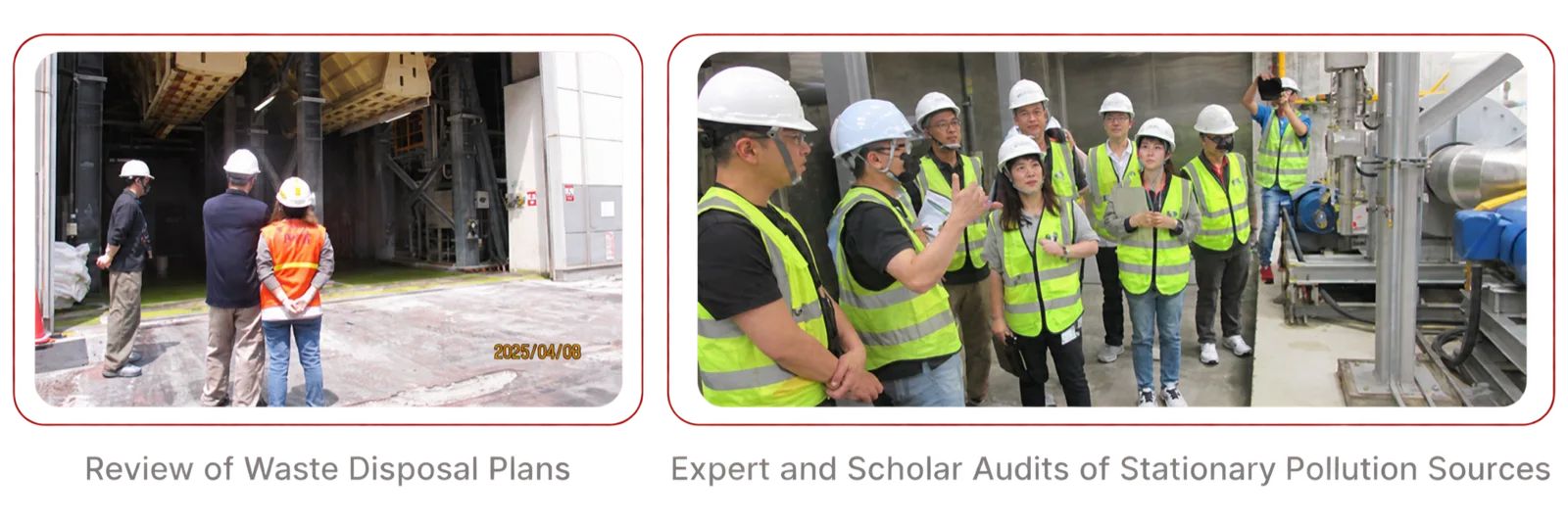
From 2024 to 2025, the CTSP Bureau conducted a total of 505 permit compliance audits to verify whether each business unit faithfully fulfilled their permit requirements. For cases found inconsistent with the permits during the audits, the Bureau issued official letters requesting the businesses to make improvements and submit relevant application documents for permit adjustments or modifications. In addition, for audits of recycling and reuse organizations, Bureau personnel were accompanied by experts and scholars from relevant fields to assist with the auditing operations, ensuring that external recycling and reuse facilities properly process waste generated by park enterprises.
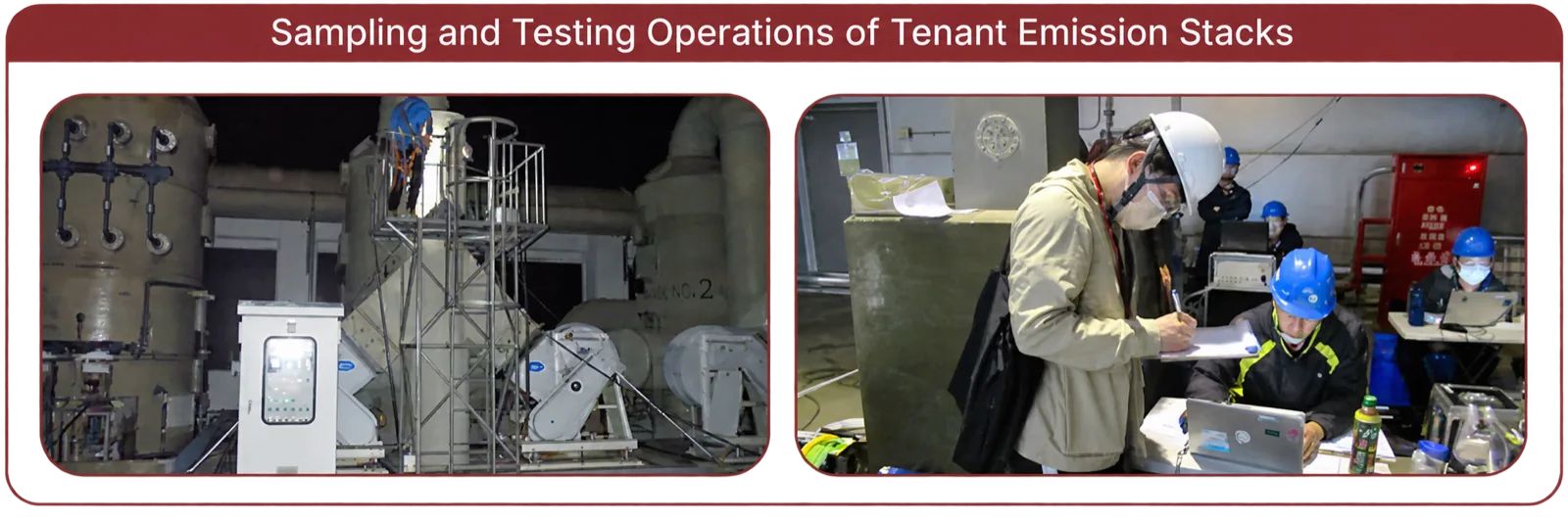
The Bureau conducts unannounced flue gas emissions sampling and testing at park facilities during daytime or nighttime. Qualified testing institutions certified by the Ministry of Environment are commissioned to monitor whether the waste gas emitted by park tenants complies with regulatory requirements. The testing results from 2024 to 2025 were all in full compliance with relevant regulations.
The bureau sets up a toll-free environmental complaint hotline 0800-777795 to provide 24-hour service, and conducts on-site inspections and handling operations. In 2024 2025, it accepted 10 complaints from the public, including 7 complaints about air pollution, 4 complaints about noise, 1 complaint about water pollution and 1 complaint about waste. The bureau immediately handled the complaints after receiving them. All the complaints in 2022-2023 have been closed.
2. Centralized sewage treatment
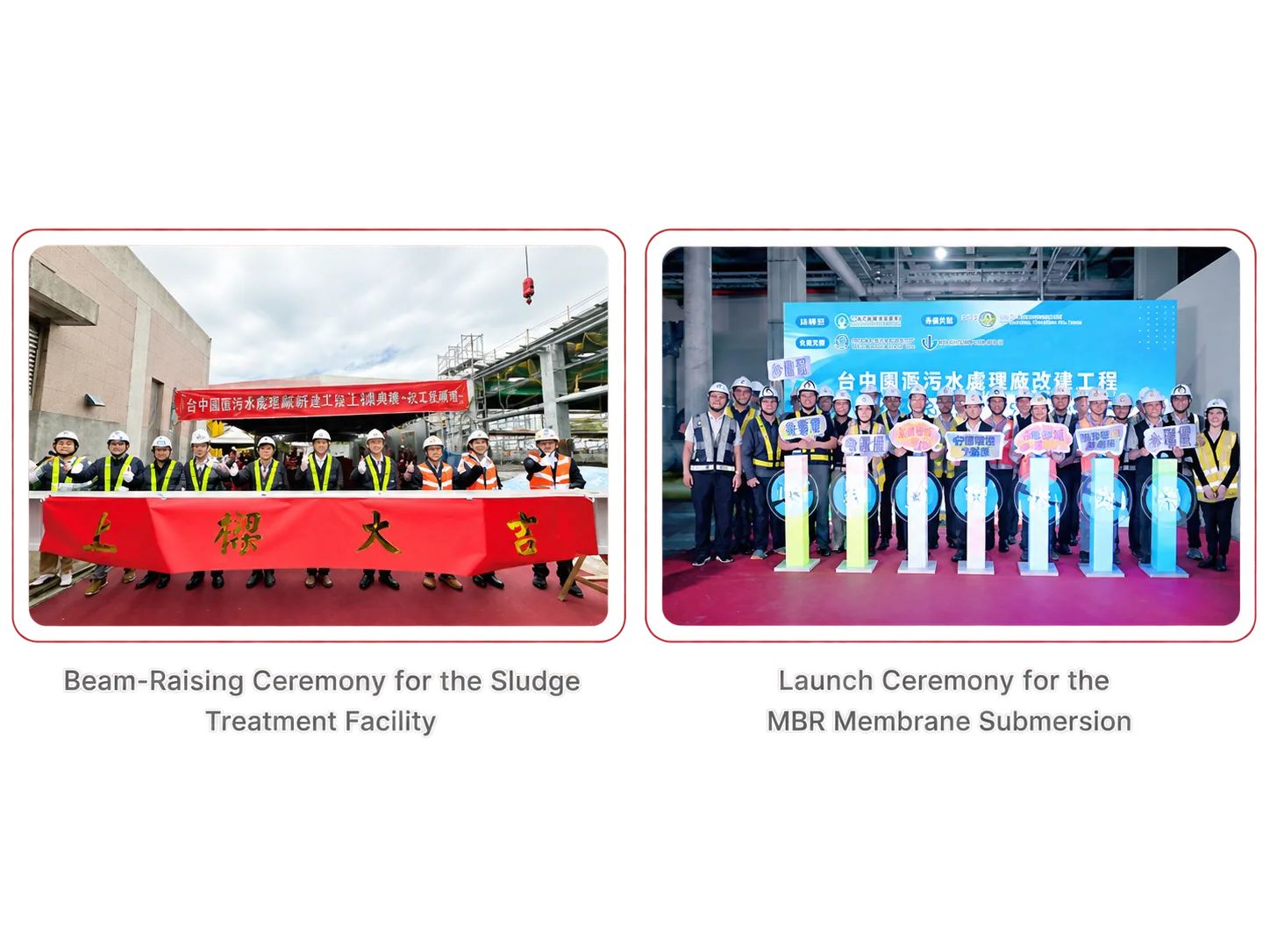
In response to the strategic deployment needs of Taiwan's semiconductor industry and future overall industrial development, the CTSP Bureau launched the Taichung Park Phase II Expansion Development Project in 2022. To handle the process wastewater treatment load brought by the Phase II expansion and to enhance the flexibility and regulation capabilities of the overall wastewater treatment system, CTSP initiated the modification and expansion project of the main park's wastewater treatment plant. The construction officially broke ground in February 2023, followed by a beam-raising ceremony for the sludge treatment facility on December 24, 2024, and a membrane submerged ceremony for the MBR system on July 22, 2025.
In 2024, the CTSP Bureau designated the Taichung Science Park Wastewater Treatment Plant as a demonstration site for smart governance and introduced an AI-powered precision chemical dosing and sensing system developed by Wolong Intelligence, a startup based in the park. Through real-time data analysis and automated control, the system standardizes wastewater chemical dosing procedures. Phased deployment began in 2025, reducing human operational errors and chemical use by 20%, while cutting electricity consumption in the relevant treatment units by 30%.After the modification, the treatment capacity of the entire plant will increase from 145,000 CMD to 163,000 CMD. Concurrently, due to the adoption of Membrane Bioreactor (MBR) technology, the effluent water quality is expected to meet reclaimed-water standards, boosting water production efficiency by 40% and saving 40% in electricity consumption. This will help drive water resource recycling and reuse, reduce tap water consumption in the park, and provide at least 3.5 million tons of annual allocation flexibility for the tap-water system, achieving maximum efficiency in water resource utilization.
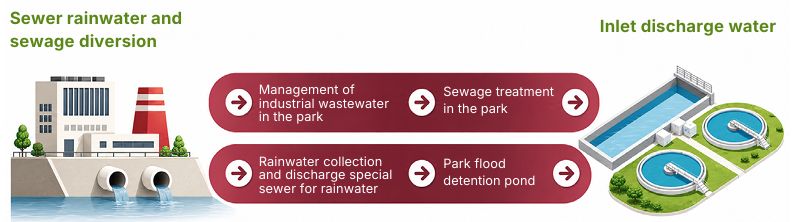
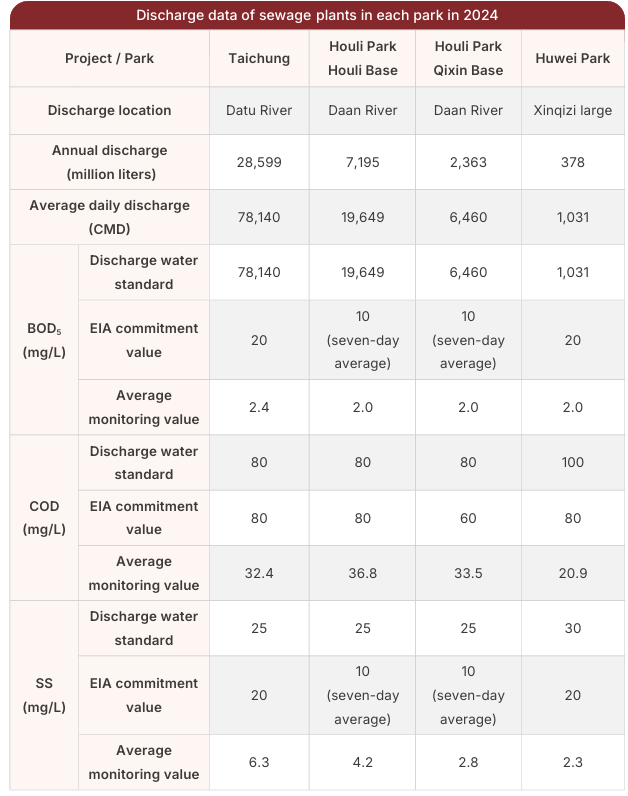
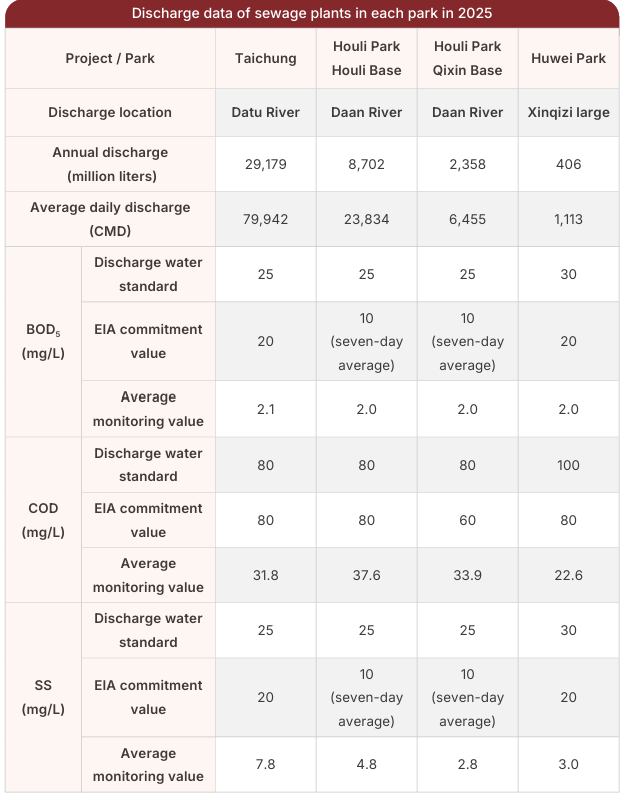
A dual-drainage system separating rainwater and wastewater has been established across all CTSP parks, achieving a 100% connection rate for park enterprises. Process wastewater from individual facilities must meet the park’s pre-treatment standards before discharge into the public sewerage system for centralized treatment. The final effluent quality must comply with both national standards and the more stringent environmental impact assessment (EIA) criteria prior to discharge. Regarding stormwater management, in addition to public runoff collection, tenants are required to implement dedicated rainwater collection pipelines and discharge points during factory construction. This runoff is directed into storm sewers, routed through the park's detention ponds, and ultimately released into receiving water bodies. Furthermore, the Bureau conducts routine sampling and analysis of the sewerage network to monitor operational status and water quality, ensuring robust and compliant discharge management.
All sewage treatment plants in the park use three-stage treatment systems, adopting standard biological treatment units of activated sludge, and followed by chemical coagulation and physical filtration units to improve the treated water quality and reduce the impacts on the receiving water body.
The operators of Zhongxing Park are mainly research and experimental industries, and no process wastewater is generated. The laboratory wastewater from the manufacturers in the park is cleared and treated by qualified manufacturers before it’s brought into the park’s sewage system. Eventually, it’ll be transported to the Zhongzheng Road Sewage Treatment Plant for proper treatment before being discharged.
3. Environmental quality monitoring
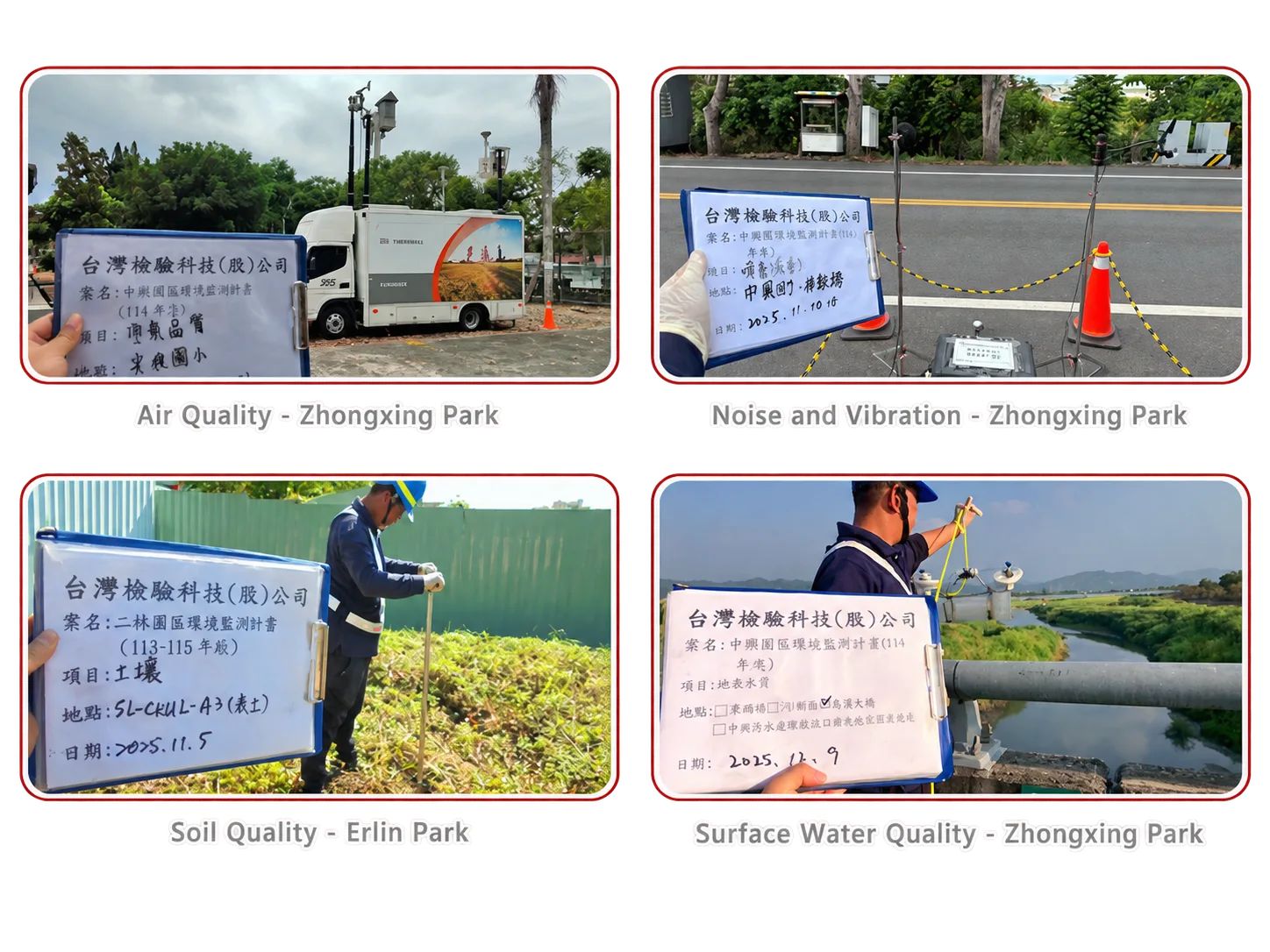
The Central Taiwan Science Park Bureau conducts environmental monitoring annually in accordance with the environmental monitoring plans specified in the environmental impact assessment documents. All major monitoring items within the park comply with regulatory standards, including air quality, noise and vibration, effluent water quality, surface water quality, groundwater quality, sediment, soil, ecology, traffic volume, and cultural assets, with a total of 4,459 sampling points monitored from 2024 to 2025.All environmental monitoring results are fully transparent and published on the "CTSP Environmental Information Integration Website" for public browsing.
In addition, in order to improve the reliability of monitoring data, the Bureau also carried out parallel monitoring in 2024-2025, including general air quality, acid and alkali gas, odor, flue detection (including night detection), water quality of civilian wells and other items, and carried out synchronous testing from time to time to ensure the quality of monitoring data. At the same time, in order to understand the night emission situation of manufacturers, it conducted six flue spot night checks in 2024-2025 together with the Environmental Protection Supervision Subcommittee (local leader). It is hoped that the impact of park operation on the environment can be truly understood through irregular testing.